

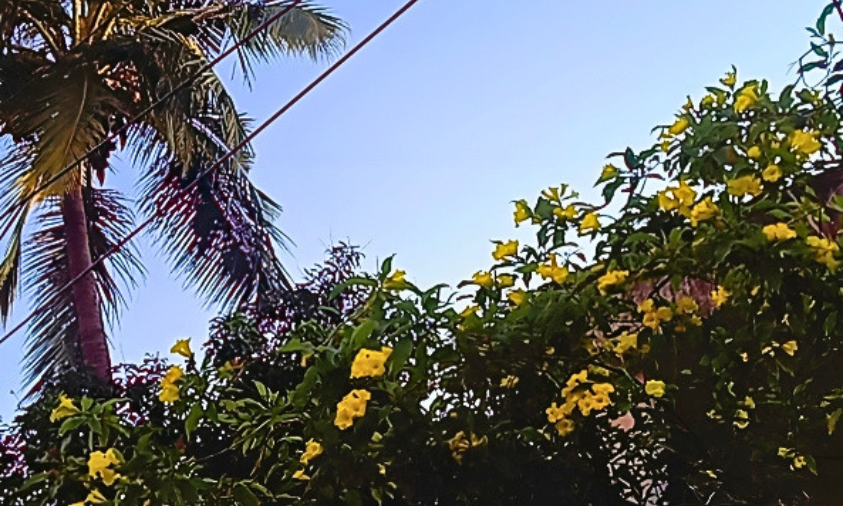
From roadside explosions of yellow to temple garlands of whites and pinks, how often do we pause to notice the flowers that mark the iconic summers of Chennai? Are these just everyday flowers we pass by, or silent markers of Chennai’s changing seasons and traditions?
This summer calls for an appreciation of the long-standing blooms of Chennai city, which is home to a rich combination of indigenous and domesticated trees and flowers.
Mr. Karthik Navaneethasundaram, an Electronics Engineering Manager by profession and a nature enthusiast by passion, has been volunteering with the NGO, Nizhal for over 10 years at Chitlapakkam Lake. Drawing from his years of field observation and environmental work, this report captures his insights on the must-notice flora and fauna of Namma Chennai, shedding light on the ecological, cultural, and seasonal significance of the city’s trees and flowers that often go unnoticed amidst urban life.
Chennai is not confined only to native trees, but is also home to domesticated trees that have thrived for over a hundred years, originating from regions of South Africa and South America. Each tree boasts its own speciality, whether through its attractiveness or the unique properties it possesses. One such unique association that can be witnessed is the deep connection between flowers and the festivals of Chennai.
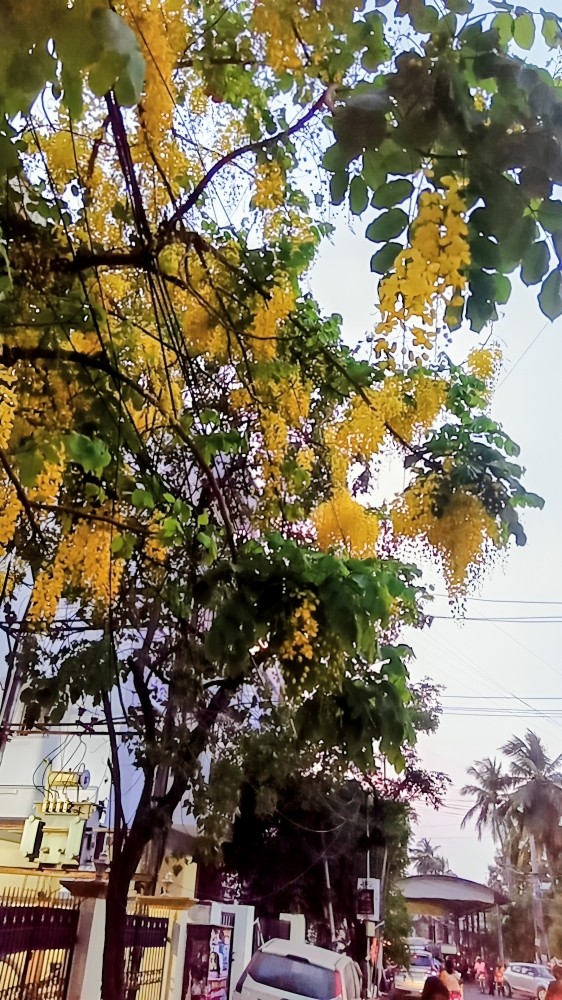
An absolutely unmissable yet underrated flower in festive use that blooms during the Chennai summers is the yellow ‘Sarakondrai’ flower (Cassia fistula), which is widely used during Vishu and traditional New Year celebrations. ‘Punnai’ flowers (Calophyllum inophyllum), which bloom from an indigenous tree, commonly flower during the month of March in summer, as well as in September, and are adorned to Lord Krishna during festivities such as Janmashtami.
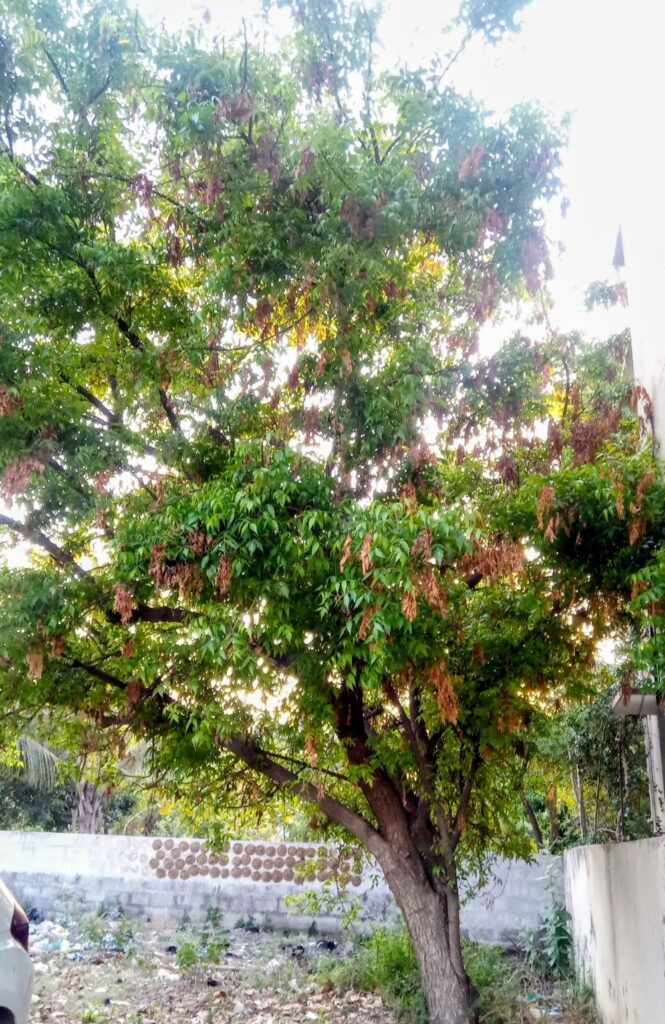
Similarly, the popular ‘Neem’ flowers (Azadirachta indica) are non-negotiable during Tamil and Telugu New Year celebrations in the month of April. Neem flowers play a major role in elevating traditional New Year dishes and are also valued for their healing properties.
While on the topic of healing properties, it is crucial to appreciate the ‘Pungam’ flower (Millettia pinnata), which grows on avenue trees planted in linear rows along pathways to create shade and enhance environmental conditions. This tree and its flowers aid in controlling atmospheric temperature by lowering it by two to three degrees, serving as an effective cooling agent during the tropical summer. Also, as the flowers possess nourishing properties, they are collected and spread across infertile soils or around minimally flowering plants to enhance plant growth and improve flowering.While visually striking flowers are often lauded, photographed, and adorned by the public, flowers like neem and Pungam remain underrated despite deserving far greater attention.
Beyond festivals and healing properties, certain flowers occupy a distinguished place in history. Since the Sangam Era, the Vaagai (Albizia lebbeck) flower has been revered as a symbol of victory, with warriors and kings traditionally adorned with Vaagai garlands following triumphs in battle. This legacy further gave rise to the popular Tamil phrase “Vaagai Soodi Vaa” or “Vetri Vaagai Sooda Vaa”, meaning “Come, wear the crown of victory.” Conversations surrounding the significance of the Vaagai flower have recently resurfaced with the emergence of the flag of the Tamizhaga Vetri Kazhagam (TVK), which prominently features the Vaagai flower at its centre as an emblem of victory.
Similarly, the underrated ‘Poomarudhu’ flower (Lagerstroemia speciosa), popularly known as the ‘Pride of India’ and originating from Maharashtra, stands out as a striking presence in Chennai’s landscape while carrying a rich historical association. The flower is linked to the legendary 18th-century Maruthu Pandiyar freedom fighter brothers, whose legacy continues through the tradition of worshipping paired marudhu trees as enduring symbols of brotherhood and victory.
While these flowers have remained an inseparable part of the city, changing climatic and environmental conditions have begun to affect their growth and seasonal patterns. Factors such as shifting monsoon cycles, rapid urbanisation, and increasing water scarcity have significantly influenced the availability and flourishing of these blooms. For instance, the previous year’s monsoon largely determines the flowering cycle of many plants, and in recent years, neem trees have been observed flowering nearly a week later than usual during summer.
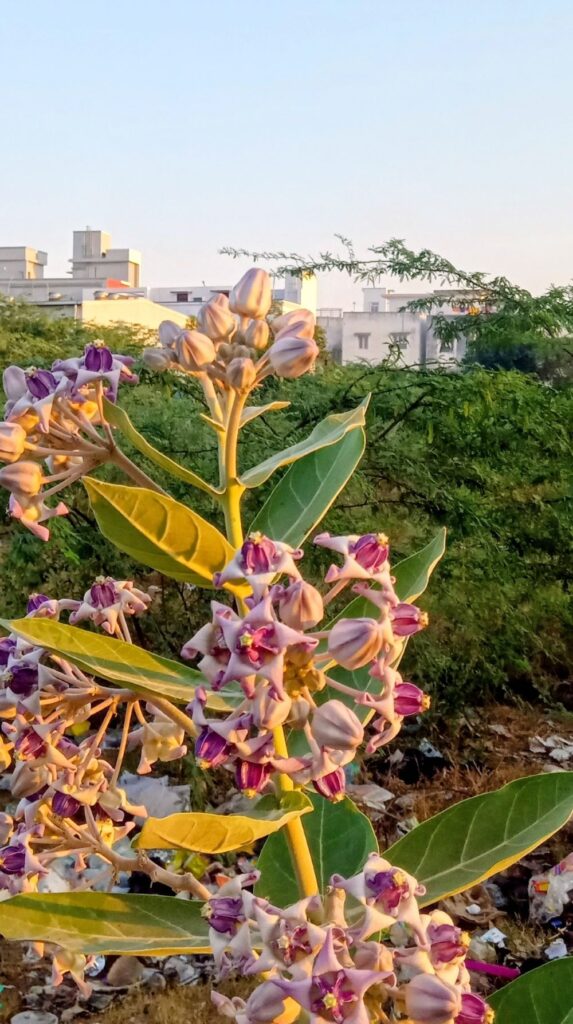
Moreover,a gradual decline of several flowers that were once abundant across the cityscape is prevalent. Native blooms such as the Erukkam flower and Thumbai are now on the verge of disappearing entirely from Chennai’s environment. Their decline serves as a pressing reminder of the urgent need for greater public awareness and collective environmental responsibility.
Everyone can contribute towards environmental responsibility through small yet meaningful steps, such as cultivating low-maintenance plants like ‘Arali’ flowers (Nerium oleander), which can also be used for daily purposes and are less likely to be damaged by passersby or animals. Similarly, ‘Nithyakalyani’ (Madagascar periwinkle or Catharanthus roseus), a compact and resilient shrub, can be easily nurtured in small tubs or balconies, making it an ideal plant for urban households with limited space.
Do you see these trees and flowers in your neighbourhood this summer?
Photos by Samyuktha Chandrashekar

Student Intern during April – June 2026
Well written and the essence is neatly captured. I am sure many will turn towards these flowers when they go around Chennai. Bird sighting and tree sighting are great hobbies lifelong.