

Politics is widely observed and discussed among school and college students, yet only a few consider it a stable career path. A survey of 16 students reflects the mentality that while social awareness is high, interest in politics is limited.
Only four students expressed any interest in entering politics, while the majority did not.
Many described the field as unappealing or difficult to navigate. A high school respondent said, “It’s stressful and messy, and I have other things I’m more interested in.” Another respondent noted they were “not brave enough” to engage with a system they already considered flawed. When asked to describe politics in one word, common responses included “corruption,” “power,” and “drama.”
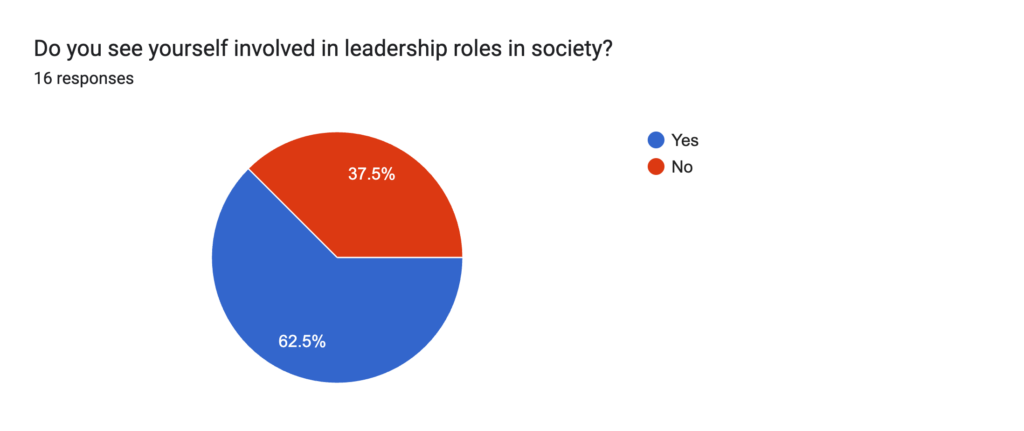
In contrast, civic participation is more widely accepted among respondents. Fifteen out of sixteen indicated they would vote in elections when eligible, and 62.5% envisioned themselves assuming leadership roles in society. However, only three respondents reported actively following politics.
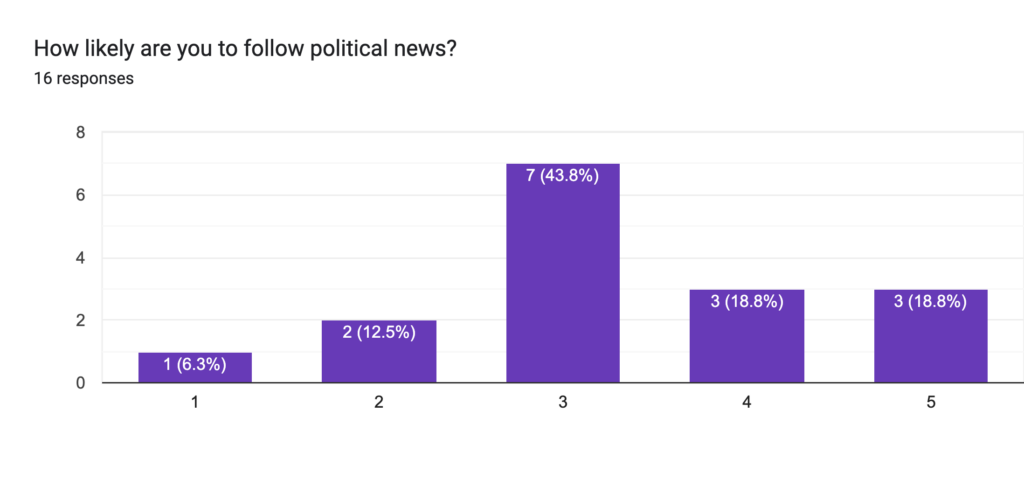
Students also showed moderate levels of engagement with political news. When asked to rate how often they follow politics on a scale of 1 to 5, most responses clustered around the middle.
Several respondents pointed to the demanding and often controversial nature of politics as a key deterrent. “It feels confusing, like our opinions don’t matter,” a college respondent said. Others described politics as disconnected from their own lives or as a space dominated by older individuals.
Despite this, students reported regular exposure to political content, primarily through social media. Many said they encounter political discussions, videos, or commentary online, even if they do not actively seek it out.
This indicates a shift in how young people engage with politics. Instead of participating directly, respondents are more likely to interact with political content digitally. Short-form videos and online discussions were described as accessible and easy to engage with.
However, increased exposure does not appear to translate into participation. While some respondents said social media makes politics easier to understand, many still do not see it as a viable career. Some described it as risky, while others said it requires a level of resilience, they are not willing to take on.
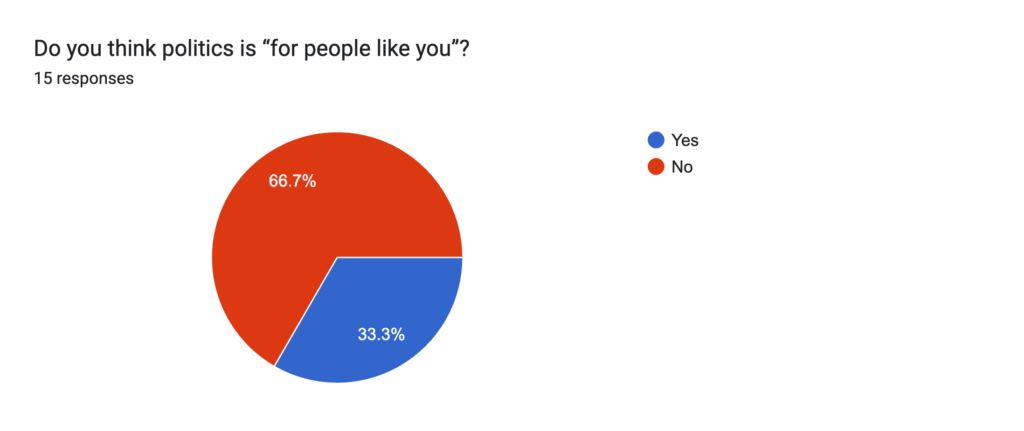
Students also identified several factors that discourage young people from entering politics, including corruption, lack of trust, social divisions, and pressure. Others mentioned outdated systems and the perception that individual voices have limited impact.
When asked what might increase interest in politics, responses included “real impactful change,” greater transparency, and more opportunities for direct involvement, such as internships. Some respondents also said that politics would be more appealing if young people’s opinions were taken more seriously.
Media representation was identified as another key influence. While some respondents felt coverage could be balanced, many said it tends to emphasise conflict and negativity. One student described politics as a “catfight between rich and powerful people,” while another said it “exaggerates more than it informs.”
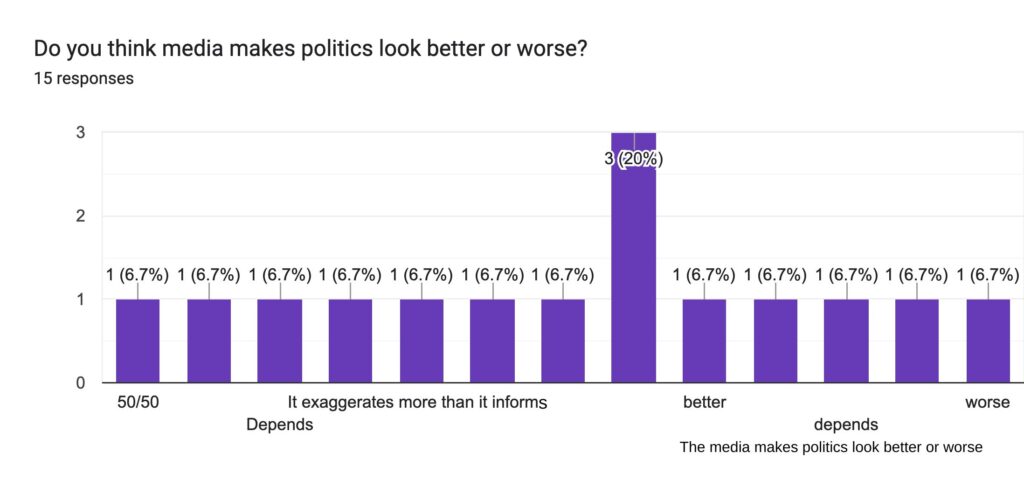
Respondents were not identified by name to encourage honest responses.
Overall, the findings highlight a gap between awareness and participation. While students are exposed to political content and form opinions about it, fewer see themselves entering the field. For many, politics remains something they observe and discuss, rather than a path they expect to pursue.
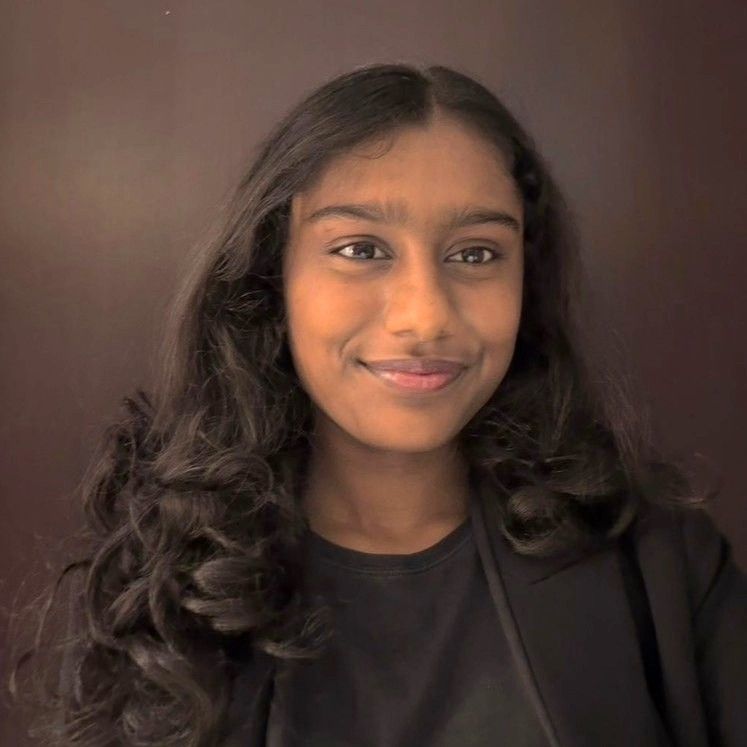
A high school student based in Chennai, Rida is fascinated by stories, whether they’re found in history books, local communities, or everyday conversations. She enjoys writing about culture, social issues, and the people and events that shape the world around us.
Student Intern from April – June 2026